





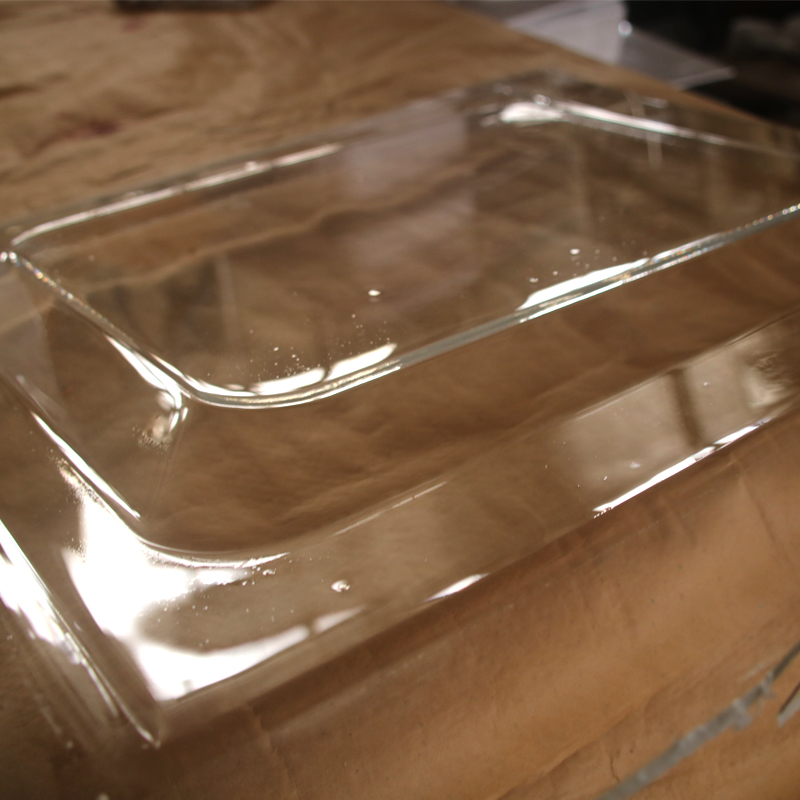
Unlocking the Potential of Thick Vacuum Forming: A Comprehensive Guide for Durable Plastic Manufacturing
What is Thick Vacuum Forming?
Thick vacuum forming is a thermoforming process that transforms heavy-gauge plastic sheets (typically 2 mm to 10 mm thick) into durable, three-dimensional parts. Unlike thin-gauge vacuum forming, which is used for lightweight packaging, thick vacuum forming creates components that can withstand significant mechanical stress and environmental exposure. The process involves heating a plastic sheet until pliable, then draping it over a mold and applying vacuum pressure to pull the material tightly against the mold surface. After cooling, the part is trimmed and finished.
Key Benefits of Thick Vacuum Forming
One of the primary advantages of thick vacuum forming is its cost-effectiveness for low to medium production volumes. Unlike injection molding, which requires expensive metal molds, thick vacuum forming uses molds made from wood, aluminum, or epoxy, reducing upfront costs significantly. Additionally, the process offers design flexibility, allowing for complex geometries, undercuts, and textured surfaces. The resulting parts exhibit high impact resistance and durability, making them ideal for applications like truck bed liners, medical device housings, and aircraft interior panels. Another benefit is quick turnaround times; mold fabrication and prototyping can be completed in days, accelerating product development cycles.
Common Materials Used in Thick Vacuum Forming
Choosing the right material is critical for success. ABS (Acrylonitrile Butadiene Styrene) is popular for its toughness and impact resistance, often used in automotive dashboards and electronic enclosures. Polycarbonate (PC) offers excellent clarity and heat resistance, suitable for protective goggles and lighting covers. Acrylic (PMMA) provides optical transparency and UV stability, ideal for skylights and signage. HDPE (High-Density Polyethylene) is chemical-resistant and food-safe, common in chemical tanks and food processing equipment. For flame-retardant applications, PVC (Polyvinyl Chloride) or PEI (Polyetherimide) are used in aerospace and electronics. Each material has distinct properties regarding temperature resistance, rigidity, and finish, so selection should align with the part's functional requirements.
The Thick Vacuum Forming Process Step by Step
Understanding the steps ensures quality outcomes. First, design and mold making: Engineers create a CAD model, and the mold is fabricated with draft angles (typically 3–5 degrees) to facilitate part release. Second, material preparation: The plastic sheet is cut to size and clamped in the frame of the vacuum forming machine. Third, heating: The sheet is heated in an oven until it reaches its forming temperature (e.g., 160–180°C for ABS). Fourth, forming: The heated sheet is moved over the mold, and vacuum is applied to draw the plastic into shape. For thick sheets, plug assist or pressure forming may be used to ensure uniform thickness. Fifth, cooling: The part is cooled using fans or compressed air to solidify. Finally, trimming and finishing: Excess material is cut away using CNC routers or five-axis waterjet cutters, and holes, inserts, or surface textures are added as needed.
Applications Across Industries
Automotive: Thick vacuum forming creates durable components such as interior trim panels, battery covers for electric vehicles, and underbody shields. Medical: Equipment housings, MRI machine covers, and surgical instrument trays benefit from the process's ability to produce sterilizable, smooth surfaces. Aerospace: Cabin panels, ductwork, and seat components leverage the lightweight yet strong properties of materials like PEI. Industrial: Trays, pallets, and machine guards are common, where chemical resistance and impact strength are paramount. Consumer goods: Spa tubs, recreational vehicle parts, and outdoor signage illustrate the aesthetic and functional capabilities of thick vacuum forming.
Design Considerations for Optimal Results
To achieve consistent quality, designers should consider uniform wall thickness. Deep draws and sharp corners often cause thinning; adding radii and incorporating draft angles helps. Undercuts are possible but require side-action molds or manual removal. Texture and finish can be directly applied by texturing the mold; smooth mold surfaces yield glossy parts, while textured molds produce matte finishes. Additionally, material shrinkage (approximately 0.5–1%) must be accounted for in mold dimensions. Using female molds (cavity side) typically yields better surface detail reproduction, while male molds (plug side) are easier for parts requiring tight tolerances on interior dimensions.
Advanced Techniques: Pressure Forming and Twin-Sheet Forming
For parts requiring higher definition or hollow structures, advanced variants are used. Pressure forming adds positive air pressure on the back of the heated sheet, forcing it into finer mold details—ideal for textured or intricate designs. Twin-sheet forming involves heating two sheets separately and then fusing them together with a vacuum in a single mold, creating hollow parts like kayaks or medical chambers. These techniques expand the possibilities of thick vacuum forming, enabling stronger, lighter, and more complex products.
Quality Control and Troubleshooting
Common defects include webbing (bridging of material over concave areas), thin spots (due to excessive stretching), and sink marks (from improper cooling). Mitigation strategies include adjusting heating profiles, modifying mold design, or using plug assists. Regular inspection using thickness gauges and visual checks ensures consistency. For high-volume production, in-line sensors monitor temperature and vacuum levels. It is also crucial to anneal parts after forming in some cases to relieve residual stresses, especially for materials like polycarbonate.
常见问题
What is the maximum thickness for thick vacuum forming?Most machines handle sheets from 2 mm to 10 mm thick, but specialized presses can form sheets up to 20 mm. Material choice and part geometry dictate the feasible limit.
How does thick vacuum forming compare to injection molding?Thick vacuum forming has lower tooling costs (10–20% of injection molding) and faster lead times, but per-part cost is higher at large volumes. It is best for 100–10,000 parts per year.
Can thick vacuum formed parts be painted or bonded?Yes, most thermoplastics accept paint, adhesives, and secondary operations like welding. Surface preparation (e.g., flame treatment) may be needed for materials like polypropylene.
What are the typical tolerances achievable?Typical tolerances are ±0.5–1.0 mm, depending on material and design. Pressure forming can achieve tighter tolerances (±0.25 mm).